


What is wear-resistant steel and what is it used for?
Complete explanation of wear-resistant steel: composition, manufacturing process, hardness levels and main applications in mining and industry.
What is wear-resistant steel?
Wear-resistant steel is a type of alloyed and quenched steel specifically designed to resist abrasion in demanding industrial environments. Unlike conventional structural steel, this material undergoes a quenching and tempering process that gives it significantly higher surface hardness.
How is it manufactured?
The process begins with a controlled chemical composition that includes carbon, manganese, chromium, nickel and molybdenum. After hot rolling, the plates go through a quenching cycle (heating to over 900°C followed by rapid water cooling) and subsequent tempering that balances hardness with toughness.
Hardness levels
Hardness is measured on the Brinell scale (HB). The most common grades are:
- 400 HB — Balance between wear resistance and weldability. Ideal for general applications.
- 450 HB — Higher resistance for moderate to severe abrasion environments.
- 500 HB — Maximum hardness for the most extreme sliding wear conditions.
Main applications
Wear-resistant steel is used in:
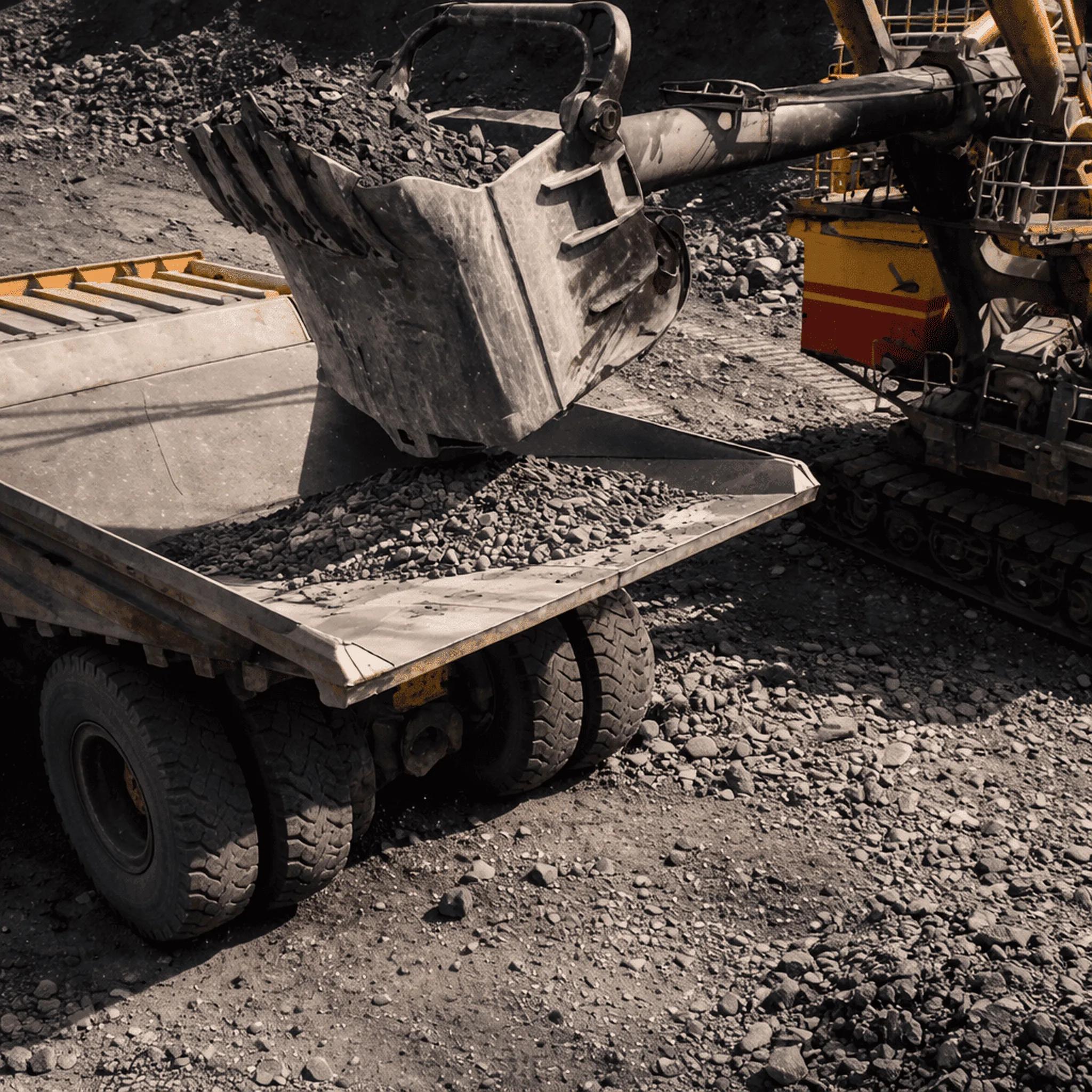
- Dump truck bodies
- Mining shovel buckets
- Crusher liners
- Hoppers and transfer chutes
- Drilling equipment
BRINAR® as a reference
BRINAR® is the wear-resistant steel brand from the Salzgitter Group in Germany, available in grades 400, 450 and 500. It stands out for its dimensional consistency, complete certification and availability in thicknesses from 6 to 120 mm.
Need wear-resistant steel for your project?
Quote BRINAR® 400, 450 or 500 with delivery from our warehouse in Monterrey.